
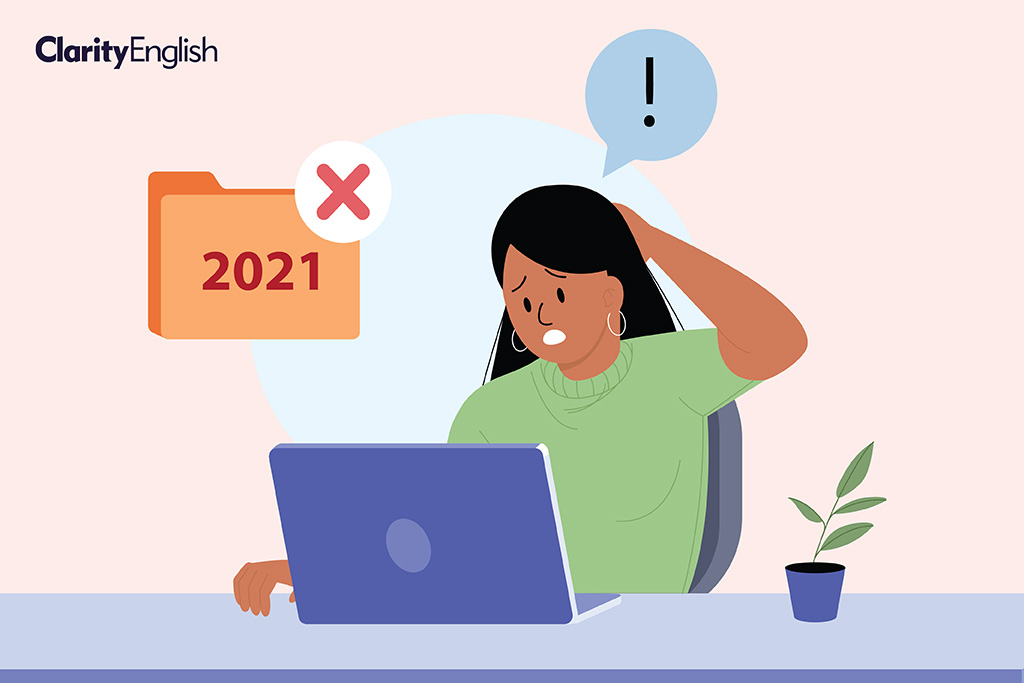
If you’ve written teaching and learning materials yourself, you’ll know how quickly they can go out of date. But why? Language doesn’t fundamentally change in the short term, so why does the present perfect activity you wrote in 2021 look so dated in 2026? The answer lies in five elements that we, as materials writers and educators, all need to keep an eye on.
1. Language doesn’t fundamentally change…
Yes, language is in a constant state of flux, but that tends to be around the edges. The conceptual framework of the tense system in English, for example, is a constant, along with the distinction between long and short vowels and the principles of sentence stress. And what changes there are can be temporary. Take phonology. A decade or so ago in British English, there was a switch to rising intonation at the end of statements among some demographics. That trend is no longer as prominent as it once was. Or pronouns. For all the debate about pronouns and gender, all that’s really changed in the mainstream is ‘they’ as a third person singular (and according to the OED, that dates back to 1375). So as far as the grammar is concerned, your present perfect activity is almost certainly still solid.
2. … but discourse does.
What has changed is discourse, genres, text types – the way we communicate with each other. Learning materials need to reflect this for two main reasons. Firstly, students spend much of their lives in a social media environment and we need to equip them to operate there in English. As a result, Clarity’s Practical Writing was updated to include a unit on creating a LinkedIn profile and another on writing restaurant and hotel reviews for Google reviews (or similar). Active Reading includes comprehension texts from WhatsApp groups followed by activities where learners ‘translate’ between TextSpeak and standard English. Secondly, as they ‘translate’, they need to be aware that social norms and levels of formality change on these platforms so teaching learners to be adaptable and focus on tone is really important.
3. … and so does society.
Politics and cultural references are the fastest ways to age your materials. If a 2019 reading text names a political leader who has since left office, or raises the question of whether office workers could ever work from home, the student may stop focusing on the target language and start thinking about how old the context is. But it goes beyond the news cycle to the politics of society itself. Gender politics, for example, influences the way we present the world: relying on outdated professional stereotypes or failing to use inclusive language also makes a course feel out-of-date.
4. … and technology.
It’s not just that learners are using the materials on different devices – computers, tablets, laptops, mobiles – and that the delivery of materials needs to keep up with this. It’s also that new technology opens up new approaches to learning and students need to be guided to get the most out of it. For example, in our new version of Tense Buster, we include ‘AI-enabling’ activities, helping learners to understand how AI can help them and providing prompts that they can deploy and adapt for future independent learning. In Arrivals in English, we help learners navigate ELT materials on YouTube, and encourage them to explore apps like Translate, italki and Space.
5. … as do visuals.
Video ages surprisingly fast. Even 10 years ago, students would have expected professionally shot videos in their learning materials and would have considered anything shot on a phone to be amateurish and even off-putting. That’s changed as video production has democratised, and, paradoxically, an in-house, personal style perfectly matches the YouTube-type videos learners are used to. And let’s not forget photos, which are a massive give-away. Nothing dates a course faster than a learner spotting a ten-year-old smartphone or an outdated haircut.
Clarity has been publishing digital ELT materials since 1992 and if we’ve learned anything in that time, it’s that a digital course is never actually finished. You can try to future-proof your content, but ultimately, staying relevant just comes down to a rigorous editorial schedule, and a detailed review and update of all our learning materials on a two-year cycle. And, of course, keeping a close eye on the haircuts.
